Nicki Minaj has sparked widespread backlash after publicly declaring herself Donald Trump’s “No. 1 fan,” a move that has intensified disappointment and anger among many of her longtime supporters.
The rapper made the statement during a Treasury Department–hosted summit in Washington, D.C., held to promote “Trump Accounts,” a proposed investment program for newborn children. Minaj pledged between $150,000 and $300,000 toward the initiative, describing it on social media as “the true meaning of paying it forward” and praising early financial literacy as a way to give children a head start in life.
While the program itself received some praise, Minaj’s outspoken endorsement of Trump quickly overshadowed the event. Addressing the audience, she said criticism only strengthens her support for the president. “The hate does not affect me at all,” she said. “It actually motivates me to support him more. We’re not going to let them get away with bullying him or smear campaigns. God is protecting him.”
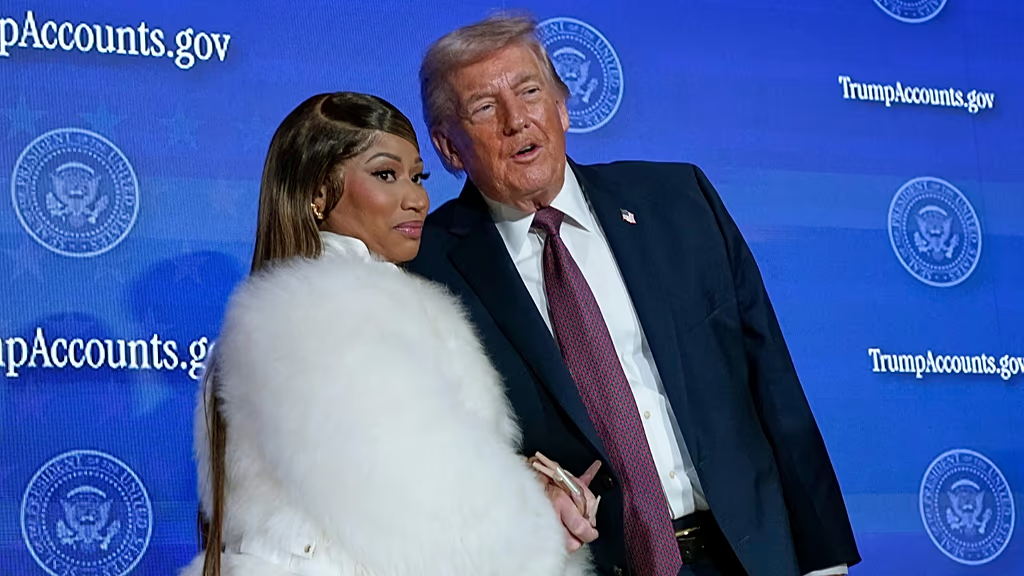
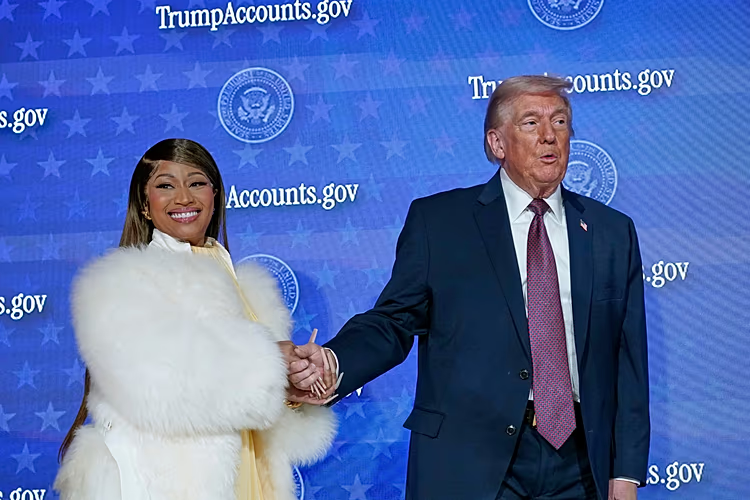
Trump returned the praise, calling Minaj “the greatest and most successful female rapper in history,” a claim many music fans would dispute, citing artists such as Lauryn Hill, Missy Elliott, Foxy Brown, and Doja Cat. He also thanked her for donating “hundreds of thousands of dollars” to the initiative and made lighthearted comments about her signature long nails.
Minaj also received a $1 million Trump Gold Card, which reportedly offers a fast track to U.S. citizenship for individuals deemed to provide “substantial benefit” to the country. This detail drew attention after Minaj previously stated she was not a U.S. citizen, having immigrated from Trinidad and Tobago as a child.
Her appearance marked the latest in a series of public gestures aligning her with the MAGA movement. In recent months, Minaj has praised Vice President JD Vance, shared White House promotional content, appeared at Turning Point USA events, and spoken at conservative youth gatherings. She has referred to Trump as “handsome” and “dashing” and described both Trump and Vance as relatable figures with “heart.”
This political shift contrasts sharply with Minaj’s earlier positions. In 2018, she criticized family separations at the border during Trump’s first term, and in 2020 she said she would not “jump on the Trump bandwagon.” Now, critics argue, she appears to be leading it.
The response from her fanbase has been swift. Many “Barbz” have unfollowed Minaj on social media and accused her of betraying the LGBTQ+ community, which has long been a core part of her audience and which Trump has repeatedly targeted through policy and rhetoric.
One former fan posted a video of himself discarding Minaj’s vinyl records, writing that while her past controversies were troubling, her direct support of Trump was “the last straw.”
As cultural opposition to Trump continues to grow—fuelled by criticism from artists, filmmakers, and business leaders—Minaj’s stance has placed her increasingly at odds with the entertainment industry and with the community that once championed her rise.