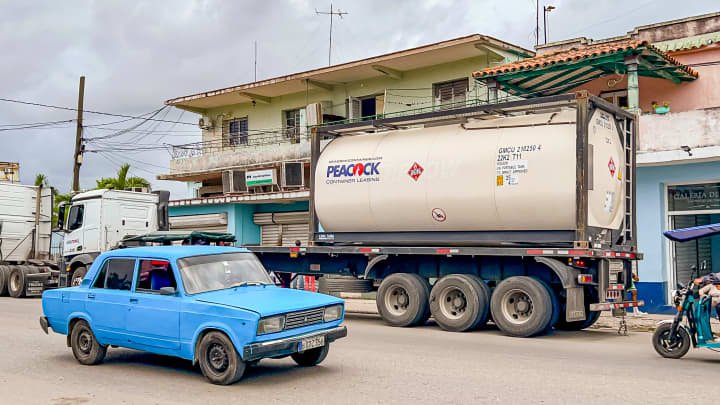
Introduction: A High-Stakes Standoff in the Caribbean
The Caribbean Sea is rarely the center of global energy politics — but that changed dramatically when the United States issued a stark warning: Cuba is prohibited from taking Russian oil, even as two tankers loaded with Russian crude were already making their way toward the island.
This is not just a story about oil. It is a story about sanctions, geopolitical chess moves, energy desperation, and what happens when a small island nation caught between two world powers tries to keep its lights on. As the US tightens its grip on Russia’s global energy exports following the ongoing Ukraine conflict, Cuba finds itself in an increasingly difficult position.
Here’s everything you need to know about this unfolding situation — and what it means for the broader global energy landscape.
Background: Why Is Russia Sending Oil to Cuba?
Cuba has been battling a severe energy crisis for years. Chronic fuel shortages have led to rolling blackouts that can last up to 20 hours a day in some parts of the country. The national power grid is crumbling, public transportation is paralyzed, and everyday life for millions of Cubans has become extraordinarily difficult.
Venezuela, Cuba’s longtime oil benefactor, has seen its own production decline sharply over the past decade. As Venezuelan supply dried up, Cuba began looking elsewhere — and Russia, eager to find buyers for its sanctioned crude, stepped in.
Russia has been selling discounted oil to countries willing to absorb the political risk of bypassing Western sanctions. Cuba, locked in a decades-long standoff with the United States anyway, appeared to be a willing partner. The two countries have maintained friendly ties since the Cold War, making Russia a natural alternative supplier for Havana.
That’s the context behind the two tankers — reportedly carrying Russian crude — that were spotted heading toward the Cuban coast.
The US Warning: What Exactly Did Washington Say?
The United States moved quickly to draw a clear line. US officials stated plainly that Cuba is prohibited from accepting Russian oil under the framework of existing sanctions against Russia. The warning was directed not just at Cuba but also at any shipping companies, port operators, or intermediaries that might facilitate the transaction.
Key Points of the US Position:
- Sanctions enforcement: The US has imposed sweeping sanctions on Russian energy exports since the invasion of Ukraine. Any entity — including foreign governments — that materially assists Russia’s energy sector could face secondary sanctions.
- Cuba already under embargo: Cuba itself operates under a long-standing US trade embargo, which further complicates any financial transactions connected to this oil deal.
- Tanker tracking: US authorities have indicated they are actively monitoring the movement of Russian tankers and shadow fleet vessels globally, including those headed toward Latin America and the Caribbean.
- Warning to third parties: Shipping firms, insurers, and port authorities were put on notice that facilitating the transfer could expose them to legal and financial penalties.
This is part of a broader US campaign to close loopholes in its Russia sanctions architecture, which critics have argued has been too leaky — allowing Moscow to continue generating oil revenues despite Western pressure.
Cuba’s Dilemma: Between Survival and Sanctions
For Cuba’s government, this warning presents an agonizing choice. On one hand, accepting Russian oil could trigger new US penalties, further isolating the already-embargoed island economically. On the other hand, refusing the oil means plunging deeper into an energy crisis that is already destabilizing the country politically and socially.
The Human Cost of Cuba’s Energy Crisis
The blackout situation in Cuba is not just an inconvenience — it is a humanitarian concern:
- Hospitals struggle to maintain power for critical equipment.
- Food spoilage from refrigeration failures is widespread.
- Water pumping systems fail, leaving neighborhoods without clean water.
- Small businesses and farms cannot operate reliably.
With no quick domestic fix available and Venezuela unable to ramp up supply fast enough, Russian oil offers a lifeline — even a politically dangerous one.
Cuba’s government has historically prioritized regime survival and ideological alignment over compliance with US demands. It would not be surprising if Havana decided to accept the oil and weather the consequences. But the calculus has become more complex in the current global environment.
Russia’s Strategy: Using Oil as a Geopolitical Tool
Russia’s decision to ship oil to Cuba is not purely a commercial transaction. It fits into a deliberate pattern of using energy exports to build political alliances and challenge US hegemony in regions Washington considers its sphere of influence.
By sending tankers to Cuba, Russia achieves several strategic goals:
- Symbolic defiance of US sanctions in America’s backyard.
- Strengthening ties with a historically friendly government.
- Creating a precedent that other countries can bypass Western sanctions without immediate catastrophic consequences.
- Generating revenue from crude sales that might otherwise sit idle due to Western embargoes.
This move mirrors Russian energy diplomacy in other regions — from Asia to Africa — where Moscow has been actively courting countries willing to absorb discounted Russian oil in exchange for political goodwill.
The Broader Sanctions Landscape: How Effective Are They?
The US says Cuba is prohibited from taking Russian oil — but can Washington actually enforce that? This question gets to the heart of one of the most debated topics in international economics: the real-world effectiveness of energy sanctions.
Where Sanctions Are Working:
- Major European countries have significantly reduced Russian oil imports.
- Western shipping insurance companies have largely stopped covering Russian crude tankers.
- Several large international banks refuse to process transactions related to Russian energy.
Where Sanctions Are Leaking:
- India has massively increased purchases of discounted Russian crude.
- China continues to import Russian oil at record levels.
- A “shadow fleet” of uninsured, opaquely owned tankers continues to move Russian oil to willing buyers.
- Countries in Latin America, Africa, and Southeast Asia have shown little appetite for aligning with Western sanctions regimes.
Cuba’s potential acceptance of Russian oil is a symptom of this broader enforcement challenge. The US can issue warnings, but its ability to physically prevent a transaction between two sovereign states — both of which already operate outside the normal Western financial system — is inherently limited.
What Could Happen Next? Possible Scenarios
Scenario 1: Cuba Accepts the Oil, Faces New Penalties
Havana takes delivery of the Russian crude. The US responds with additional targeted sanctions — possibly against Cuban port authorities or specific government officials. The situation escalates diplomatically but stops short of direct confrontation.
Scenario 2: Cuba Blinks Under Pressure
Facing the threat of compounding sanctions on top of an already strangled economy, Cuba reluctantly turns the tankers away. Russia finds another buyer, possibly redirecting shipments to another friendly nation in the region.
Scenario 3: A Quiet Workaround
The oil is transferred via ship-to-ship operations in international waters, rebranded under a different origin designation, and delivered to Cuba with enough plausible deniability to avoid direct US action. This is the strategy the shadow fleet has successfully employed elsewhere.
Scenario 4: International Mediation
A third party — potentially Mexico or another regional power — brokers a face-saving arrangement that provides Cuba with alternative energy supply while avoiding a direct US-Russia-Cuba flashpoint.
Practical Insights: What This Means for Global Energy Markets
For investors, analysts, and policymakers watching these developments, here are key takeaways:
- Russian shadow fleet activity is increasing. Track tanker movements in the Caribbean, Indian Ocean, and Southeast Asian waters for early signals of sanction evasion.
- Cuba’s energy situation needs a long-term solution. Without sustainable fuel supply, the island faces ongoing instability — a fact both regional neighbors and international institutions should take seriously.
- Secondary sanctions are Washington’s most powerful tool. Companies doing business in global markets should audit any exposure to entities connected to Russian energy logistics.
- Latin America is becoming a new front in energy geopolitics. The US-Russia rivalry is no longer confined to Europe — it is playing out in Cuba, Venezuela, Nicaragua, and beyond.
Why This Story Matters Beyond Cuba
It would be easy to dismiss the Cuba-Russia oil standoff as a niche geopolitical story. But it is, in fact, a microcosm of the larger battle over the global energy order.
The war in Ukraine set off a chain of events that restructured global energy flows in ways that are still being sorted out. The US and its allies are trying to enforce a price cap and embargo on Russian oil. Russia is systematically dismantling that embargo through alternative markets, shadow fleets, and political alliances with countries in the Global South.
Cuba is a small but symbolically powerful battleground in this conflict. If Moscow can openly deliver oil to an island 90 miles from the Florida coast, it sends a message to the world: US sanctions have limits.
That is the real stakes of this story — not just the fate of two tankers, but the credibility of the West’s entire sanctions strategy against Russia.
Conclusion: A Caribbean Warning with Global Implications
The US says Cuba is prohibited from taking Russian oil as two tankers head to the island — and that warning encapsulates the tension, complexity, and high stakes of today’s global energy geopolitics.
Cuba desperately needs fuel. Russia wants to sell it. The United States is determined to stop the transaction. And the world is watching to see who blinks first.
Whatever happens next, this story is a reminder that energy is never just about energy. It is about power, alliances, survival, and the shifting boundaries of a world order that is being rewritten in real time.
Stay informed. Understand the connections. And remember: the next chapter in this story is still being written.